
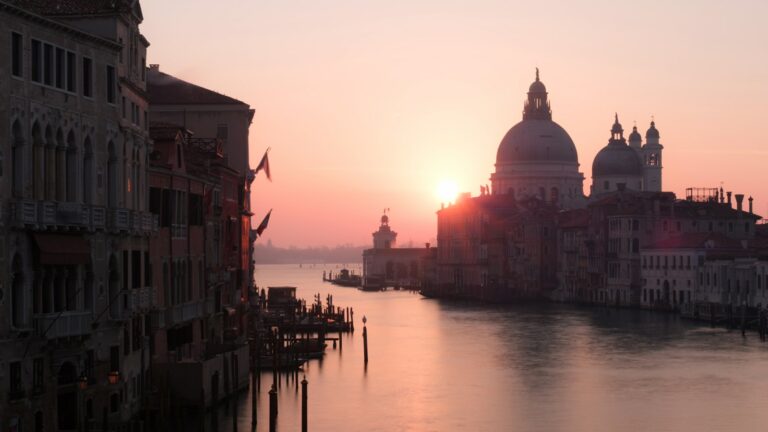
The Heart of Venice: St Mark’s square, Rialto Bridge and Grand Canal
Private walking tour of Venice's iconic St Mark's Square, Rialto Bridge & Grand Canal. Explore…
Discover More →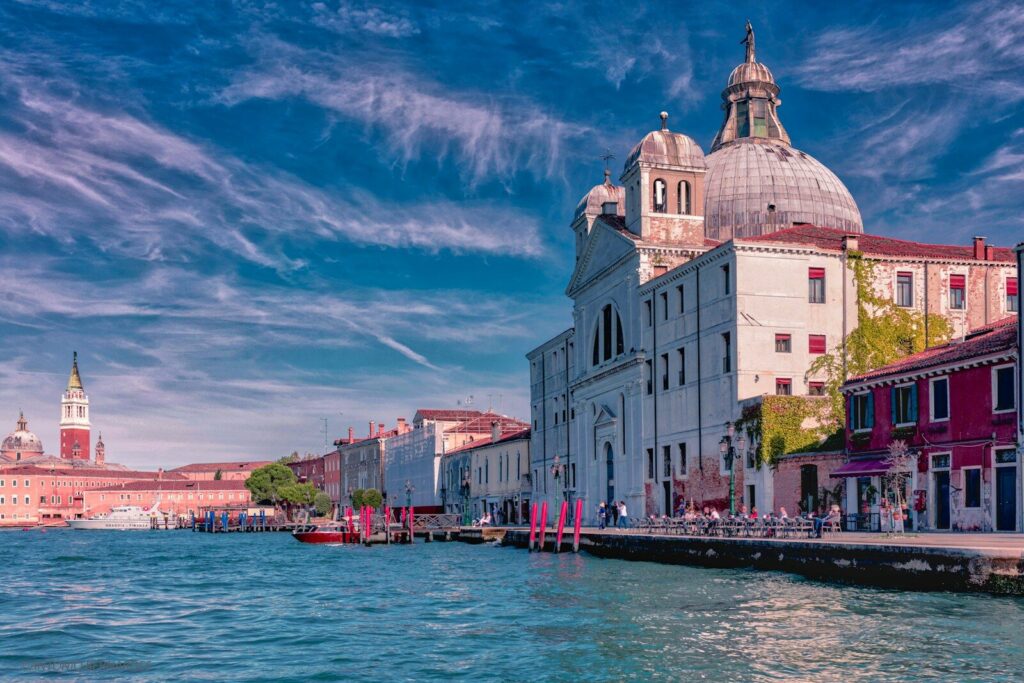
Discover Venice by private boat this spring: hidden canals, April light, and no crowds. Expert guide to the best private canal tours in Venice in April....
April does something to Venice that no other month can replicate. The acqua alta has mostly retreated. The fog of February and March has thinned to a faint memory. What takes its place is a city in a state of quiet readiness — the bridges less crowded, the fondamente still damp from the last high tide, the flower stalls at Campo Santa Margherita just beginning to fill with tulips and spring ranunculus. On the water, the light arrives differently: softer in the morning, almost amber by late afternoon, catching the surface of the smaller canals in ways that make the old brick facades look freshly lacquered.
This is the window — narrow, coveted, and genuinely unrepeatable — that the experienced Venice traveller protects. By June, the cruise ship passengers will be queuing at the traghetto crossings. By July, the city’s famous thermal mass will turn the calli into corridors of heat, and the Grand Canal will feel less like a waterway and more like a throughfare. April belongs to a different Venice entirely.
The argument for a venice private canal tour spring visit is not merely atmospheric. It is logistical, sensory, and deeply practical. The boats move more freely. The guides speak at a normal volume. The hidden canals, when you turn into them, feel genuinely private. And the city itself — still belonging more to its residents than its visitors — gives you something that peak season cannot: the sense that you arrived at exactly the right moment.
There is no more famous waterway in the world, and no canal that rewards a private approach more fully than the Grand Canal. In early April, before the Easter holiday rush peaks and well before the Biennale preview crowds descend in May, the Grand Canal operates at something close to its natural rhythm. Water taxis move purposefully rather than crawling bumper to bumper. The private water buses carrying hotel guests to the Gritti and the Aman move with a certain unhurried dignity. The produce barges from the Rialto market pass you carrying artichokes and early asparagus.
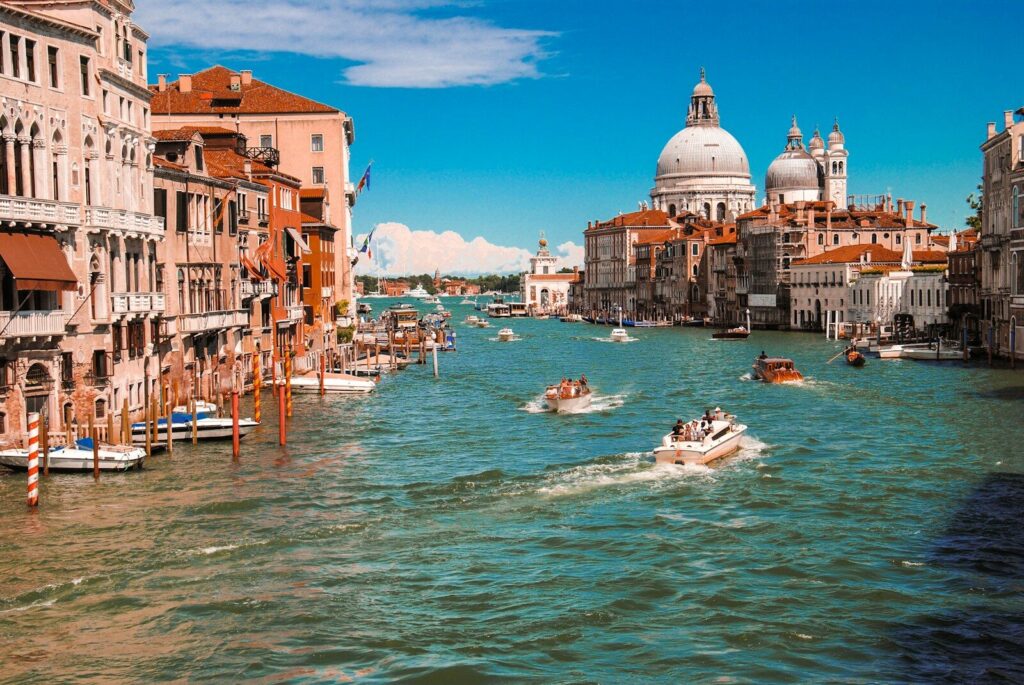
Compare this to July. In peak summer, the Grand Canal becomes a managed exercise in crowd navigation — vaporetti packed beyond comfort, boat traffic reducing pace to a crawl, the palaces visible only as backdrop to the crush of watercraft. Even the most exclusive private motoscafo cannot entirely separate you from that density.
In early April, the Grand Canal by private boat is something else entirely. You can slow down opposite Ca’ Rezzonico and actually study its rusticated facade in the morning quiet. You can ask your guide to pause near Palazzo Grassi while he explains which family built it and when. The Ca’ d’Oro — the gilded Gothic palace on the northern bank — catches the April light in a way that winter never allows. This is the venice grand canal private boat tour that photographs cannot prepare you for: the canal as a living, working, breathing thoroughfare that also happens to be the most architecturally concentrated stretch of water in existence.
The practical case for early April over late April is also worth noting. Easter, which falls in the first or second week depending on the year, brings a notable spike in visitors and prices. The week between Good Friday and Easter Monday is the single busiest period of the spring season. Those who book for the first two weeks of April — before Easter in years when it falls late — or the last two weeks after Easter has passed, tend to find the most favorable combination of good weather, reasonable crowds, and boat availability.
The gondola is the symbol. It is also, for many purposes, not the best vessel for understanding Venice by water.
A shared gondola ride — the standard 30-minute tour through the minor canals near San Marco — offers a certain romance, and there is nothing wrong with that. But a private gondola, while intimate, is slow by design, limited in range, and follows a route that gondoliers have been running for decades. You see what the route shows you.
A private motoscafo — the classic wooden Venetian motor launch — changes the equation completely. You cover more water in the same time, access the northern lagoon and the outer canals that gondolas cannot reach efficiently, and travel at a pace that allows for genuine exploration. Your captain can reverse course, hold position, or take a detour based on what you ask. The boat is covered and enclosed against the early April chill, or open to the spring air when the afternoon warms. A private venice canal tour april booking in a well-maintained motoscafo is, for most serious travellers, the correct choice.
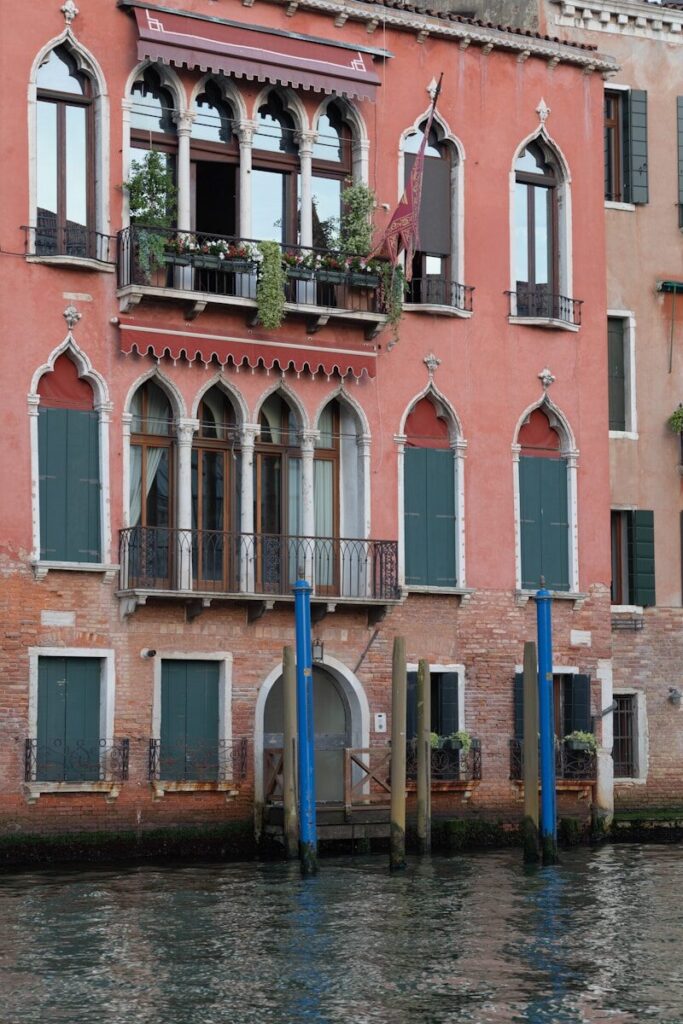
The real difference, though, is not the vessel — it is what becomes visible from it. Venice presents entirely differently at water level than it does on foot. The Gothic arches over private water gates. The stone steps descending to the canal, worn smooth by centuries of use. The laundry strung between upper-floor windows in the minor canals, the cats sitting on crumbling ledges above the waterline, the sound of a radio inside someone’s kitchen drifting across the water on a still April morning. These are the details that the best private boat tour venice hidden canals operators build their itineraries around — and they are invisible from the calle.
Venice has approximately 150 canals. The Grand Canal and the Cannaregio Canal appear on every map. The others require knowing where to look.
The Rio di San Trovaso, in Dorsoduro, is one of the rare Venetian canals with a squero — a traditional gondola boatyard — still in active operation on its bank. The Squero di San Trovaso dates from the seventeenth century and remains one of only a handful of working gondola workshops left in the city. Passing by on a private boat in April, when the yard is at work and the freshly painted hulls are drying in the spring sun, is one of those moments that reorients your sense of how old the city’s crafts actually are. The canal itself is narrow, brick-walled, and quiet — far from any tourist circuit.
The Rio della Canonica runs along the eastern edge of the Doge’s Palace complex, separating the Palazzo Ducale from the annexed buildings of the old judicial quarters. At water level, the Bridge of Sighs is a different object entirely — no longer a backdrop for Instagram, but a closed stone arch over water, small and dense, its purpose suddenly legible. Most visitors see it from the Ponte della Paglia on foot. From a private boat below, with the canal quiet in the morning, it reads as the document of state power it always was.
The Rio di San Salvador cuts through the heart of the San Marco sestiere, past the church of the same name and through one of the older commercial zones in the city. The buildings press close. In spring, the window boxes are just filling with geraniums. It is not dramatic — it is simply Venice at its most quietly functional, and all the more honest for that.
The Cannaregio canals deserve particular attention. The Cannaregio Canal itself is the widest in Venice after the Grand Canal, connecting the city to the mainland, and in April its fondamente are lined with locals rather than tour groups. But the minor canals threading through Cannaregio — past the Ghetto, the old palazzi, the ordinary apartments with boats moored at their ground floors — offer the most unfiltered view of residential Venice. The light on these canals in the morning, before the city has fully woken up, is exceptional. A venice gondola tour private spring booking through this neighborhood, early in the day, is among the most quietly moving things available to a visitor.
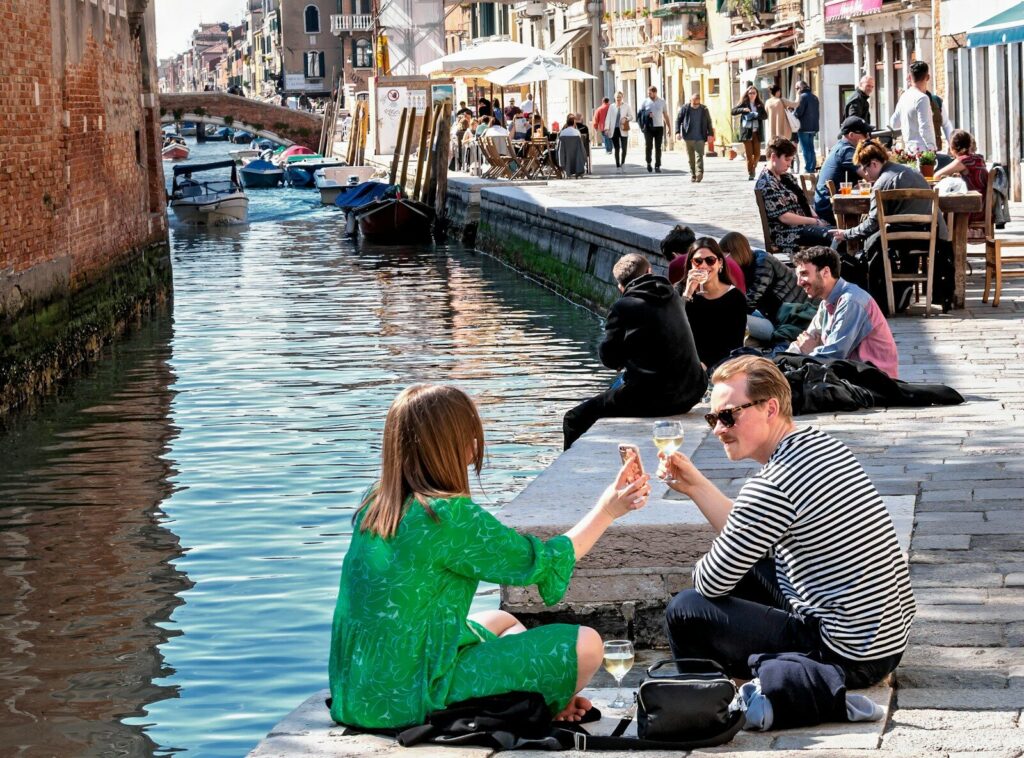
Painters from Turner to Monet came to Venice for the light, and they did not come in July. The light that made the city famous — that particular quality of illumination reflected from the lagoon and bounced off stone and water simultaneously — is at its most precise in spring, when the sun is low enough to angle across the facades at dawn and dusk rather than blasting them from directly overhead.
On a private canal tour, the timing matters enormously. Morning departures — between 7:30 and 9:00 — catch the canals before the day traffic builds and the light at its sharpest, with long shadows and high contrast that make the architecture read in three dimensions. The hidden canals in Cannaregio and Dorsoduro are particularly rewarding at this hour. The water is still. The only sounds are footsteps on bridges overhead and the occasional engine of an early delivery barge.
Late afternoon, from around 4:30 to 6:30, brings a different quality entirely. The sun drops toward the horizon over the lagoon, and the Grand Canal turns the color of old bronze. The facades of the palaces along the south bank glow in a way that midday light cannot produce. For photographers, this window is invaluable: the quality of color rendering in April’s late-afternoon sun is closer to an artist’s studio than a documentary photograph.
Easter Sunday, when it falls in April, adds another layer to the city’s character on the water. The bells of the churches — and Venice has more than a hundred of them — ring across the canals in a sonic layer that residents describe as the city’s true alarm clock. Private boats on the Grand Canal during the Easter morning hours move through a city that sounds, briefly, exactly as it did in the sixteenth century.
April 25 is both Venice’s patron saint’s day — the Feast of St. Mark — and Italy’s Liberation Day, a national holiday. The combination produces a day of genuine civic ceremony on the canals, with official boats, flower offerings into the lagoon, and a city that turns ceremonial. It is worth witnessing. It also means every private canal tour operator is fully booked, and prices reflect the demand.
The reputable operators for a venice canal tour april booking range from guide-led to boat-only, and from Grand Canal overviews to specialist hidden-canal itineraries.
On pricing: a private gondola ride runs approximately €80–120 for 30 minutes (fixed rates, though negotiable outside peak hours). A private motoscafo for a half-day canal tour typically runs €300–600 depending on the operator, vessel, and whether a licensed guide is included. Full-day private boat experiences on the Grand Canal and lagoon, with guide, can reach €800–1,500. These are not fixed figures — quality varies and bespoke itineraries command premiums — but they represent the working range for April 2026.
April 25 and the Easter weekend are the two booking pinch points of the spring season. Both dates see full operator availability consumed weeks or months in advance. For any spring visit that includes either date, booking 6–8 weeks ahead is not cautious — it is the minimum. For other April dates, 3–4 weeks is generally workable, though the best-rated operators fill earlier.
One administrative note: the Venice day-tripper access fee — €5 per person, applied on selected days to day visitors arriving without overnight accommodation — does not affect guests who are staying in Venice hotels. The fee applies to day-trippers entering the historic center on peak days, and while it is a relatively modest sum, it has been expanded in scope since its 2024 introduction. Canal tour operators who pick up from hotels within the city are not affected by it, but day visitors arriving by train and heading directly to a boat operator should confirm the applicable dates for their visit via the official Venezia Unica portal.
The canal tour is the axis around which a well-built Venice spring day should rotate. Structure the rest accordingly.
A morning on the water — departing at 8:00, covering the minor Dorsoduro and Cannaregio canals before the Grand Canal in the late-morning — positions you perfectly for a late-morning walk through the Rialto market, which winds down by noon. The fish market, the produce stalls, the traders who have been supplying Venice’s restaurants since medieval times: this is the city’s working infrastructure, and it pairs naturally with a morning spent seeing Venice at water level. Bring a light layer for the early start — April mornings on the water are cooler than the afternoon temperatures suggest.
For an afternoon tour, the late-light timing noted above makes the Grand Canal the right route. Combine it with an aperitivo stop on the fondamente of Cannaregio afterward — the outdoor bacaro culture of that neighborhood in April, with the last sun warming the canal-side tables, is as good as Venice gets for uncomplicated pleasure.
Dress practically. Canal tours involve open air, occasional spray, and the perpetual Venetian combination of stone steps and narrow boarding points. Soft-soled shoes, layers, and a small bag rather than a rolling case. The romantic image of floating through Venice in formal wear survives contact with reality only if the weather cooperates — April is generous but not guaranteed.
What to combine with the tour: the Peggy Guggenheim Collection in Dorsoduro makes sense after a morning on the water in that neighborhood. Teatro La Fenice in the evening, if the spring program includes anything that interests you, closes a spring Venice day in a way that is hard to improve upon. The Antiche Carampane near the Rialto for dinner, if you can secure a table.
Is April a good time to visit Venice for a canal tour?
April is the best single month for a venice private canal tour spring visit. The weather is mild enough for open-water touring, the crowds are meaningfully thinner than in summer, the light quality is exceptional, and the city’s working character — its markets, its residential canals, its artisan neighborhoods — is still fully present rather than submerged beneath high-season tourism. The one caveat is Easter: if it falls in April, the holiday weekend brings a sharp but temporary crowd spike, and all operators are fully booked for those specific days.
What is the difference between a private gondola ride and a private boat tour?
A private gondola ride is slower, shorter in range, and follows a well-established route through the minor canals — it is intimate and atmospheric, but limited. A private motoscafo (wooden motor launch) covers more of the city, accesses the Grand Canal and outer canals efficiently, travels at a pace that allows genuine exploration, and typically includes a licensed guide rather than a gondolier. For a serious canal tour in Venice, the private boat is the more complete experience.
How much does a private canal tour in Venice cost?
Private gondola rides start at around €80–120 for 30 minutes. A private motoscafo half-day tour with guide runs approximately €300–600. Full-day private boat experiences on the Grand Canal and lagoon reach €800–1,500 with a specialist guide. April pricing generally sits at normal season rates — April 25 and the Easter weekend are the exceptions, when demand lifts prices and availability disappears quickly.
How far in advance should I book a Venice canal tour in spring?
For April 25 or the Easter weekend: 6–8 weeks minimum. For all other April dates, 3–4 weeks is workable with most operators, though the highest-rated guides fill earlier. Do not leave it to the week of arrival.
What are the best hidden canals to see on a private boat tour?
The Rio di San Trovaso for its working gondola boatyard. The Rio della Canonica for the ground-level view of the Bridge of Sighs. The Rio di San Salvador for a functional, non-touristy read of the San Marco sestiere. And the minor canals of Cannaregio — past the Ghetto and the residential palazzi — for the most honest portrait of Venice still lived in rather than performed for visitors.
Do I need to pay the Venice day-tripper fee for a canal tour?
Not if you are staying overnight in Venice — the €5 fee applies only to day visitors on designated peak days. Guests booked into Venice hotels are exempt. Canal tour operators picking up from hotels within the historic center are unaffected. Day visitors should check the current fee calendar at Venezia Unica before arrival.
Private walking tour of Venice's iconic St Mark's Square, Rialto Bridge & Grand Canal. Explore…
Discover More →
Authentic Venice food tour through Rialto Market & traditional bacari. Taste cicchetti, local wines &…
Discover More →
Discover the magic of Venice in a unique experience: a private tour of the Grand…
Discover More →
Immerse yourself in the art of Venetian mask-making with this workshop in a traditional atelier.…
Discover More →