
Milano per le famiglie: Tour classico
Tour a piedi di Milano adatto alle famiglie, dal Teatro alla Scala al Castello Sforzesco.…
Scopri di Più →
The Quadrilatero della Moda is not a single street. It is four of them — Via Montenapoleone, Via della Spiga, Via Sant’Andrea and Via Manzoni — stitched together by eighteenth-century courtyards and home to the highest concentration of luxury flagships anywhere in the world. Step out of the metro at Montenapoleone and the air shifts: quieter, more deliberate, with the soft hum of espresso cups inside Cova and the discreet sound of boutique doors opening for clients with appointments.
In 2024, Via Montenapoleone overtook New York’s Fifth Avenue to become the most expensive retail address on earth. Rents have crossed €20,000 per square metre per year. The figures matter less than what they signal — every major fashion house now treats this short stretch of Milan as the room where it presents its best work, with the longest leases, the most ambitious flagship architecture, and staff trained for clients who travel on first names.
Walked alone, the Quadrilatero shows you its storefronts. Walked with a Milan fashion district private tour, the doors open differently — atelier visits, after-hours appointments, a stylist who can secure a private fitting by Tuesday morning. This guide explains what the district actually is, why a private fashion guide is now the standard way that design-led travellers approach it, and what to expect from an exclusive Milan boutique tour booked with care.
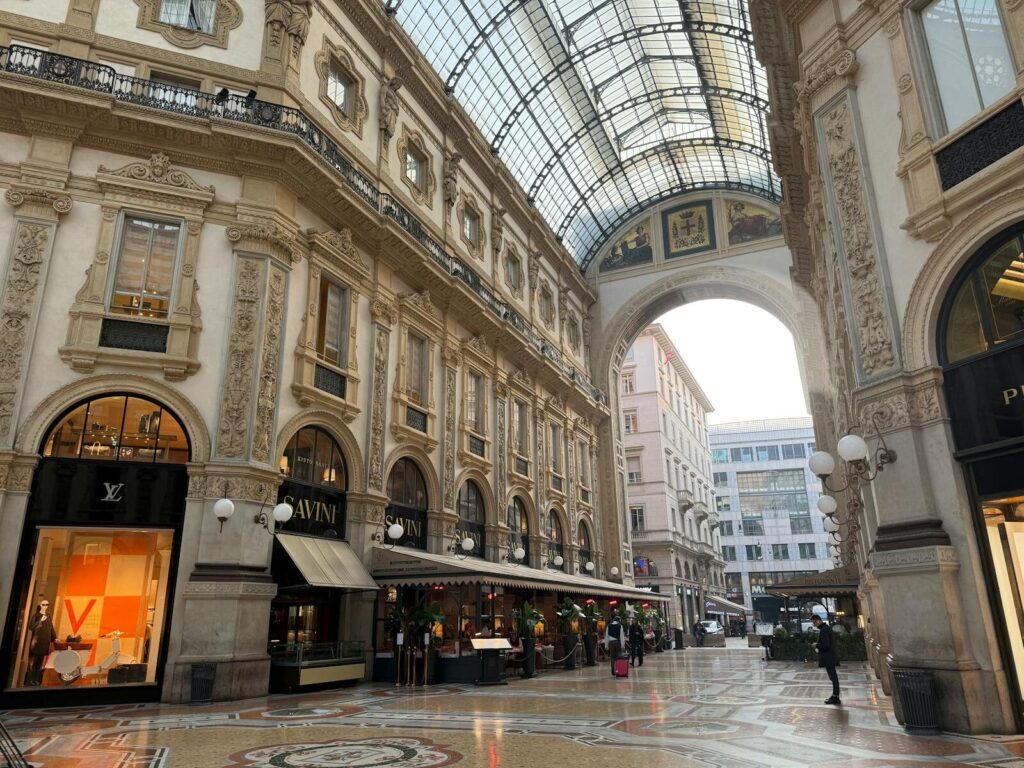
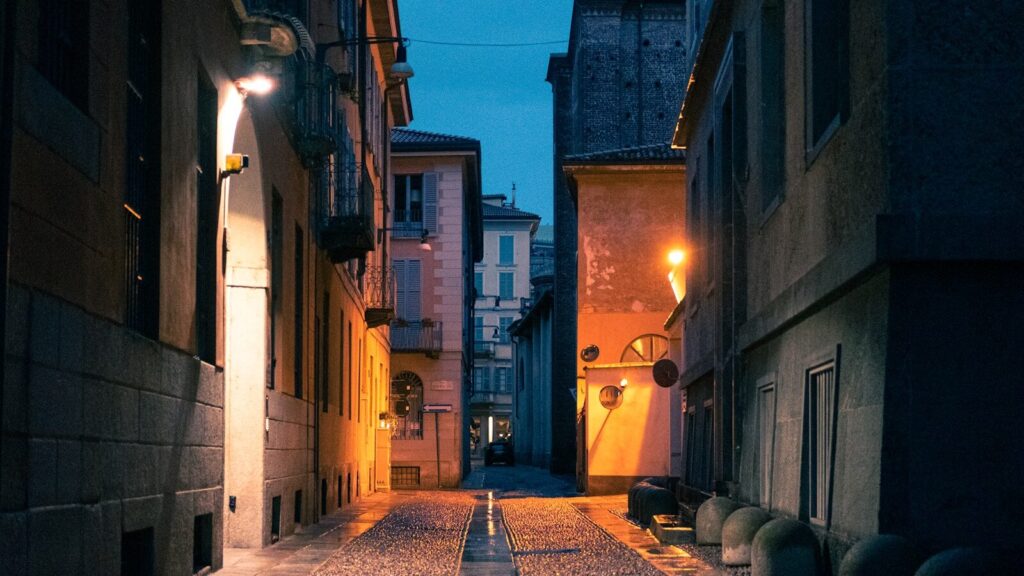
The fashion district sits inside the Roman walls, a small rectangle between the Duomo and the Giardini Pubblici. Most of it is pedestrianised, which gives the area its particular feel: slow, walkable, lined with stone façades and porter-staffed doorways. Each of the four streets has its own register.
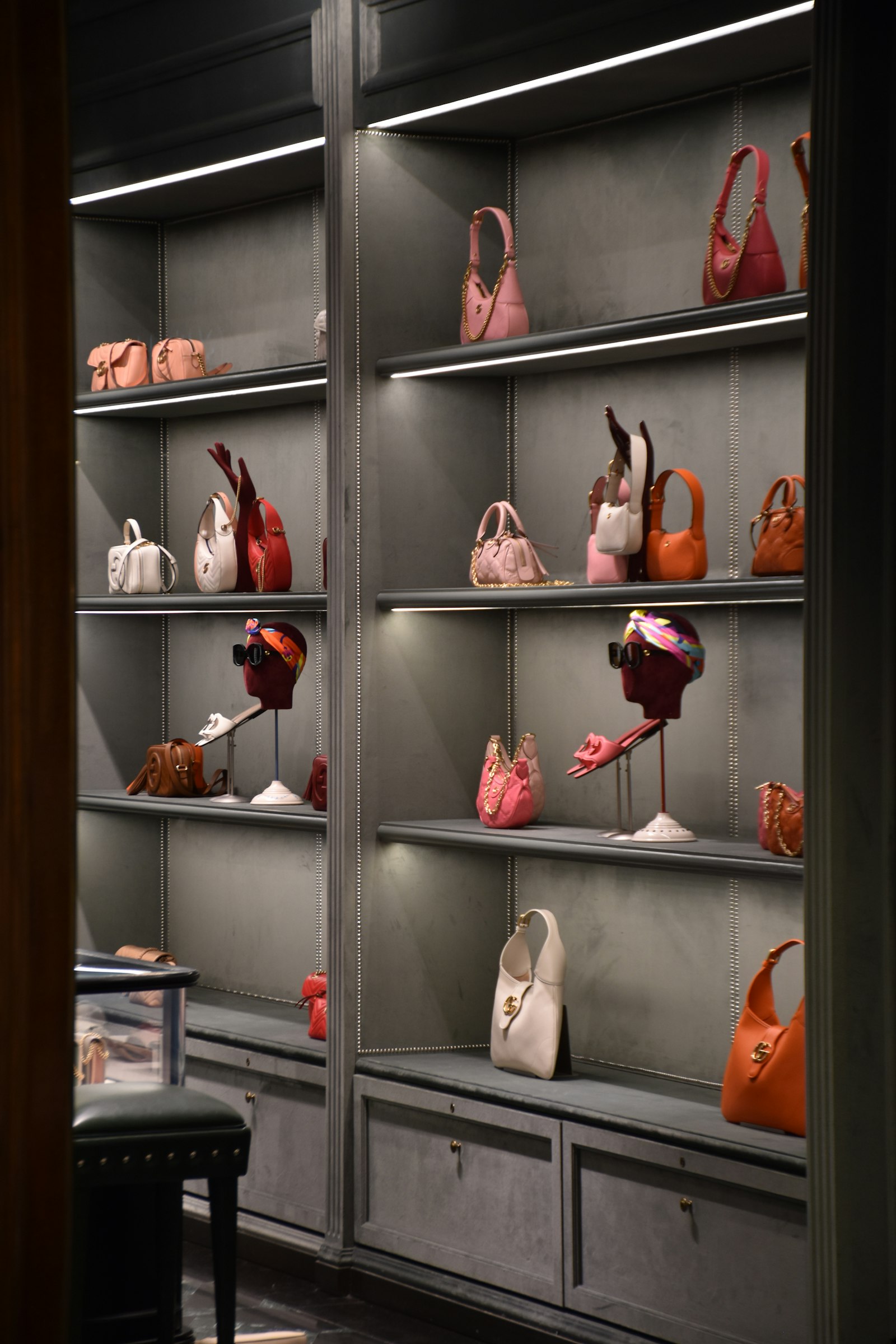
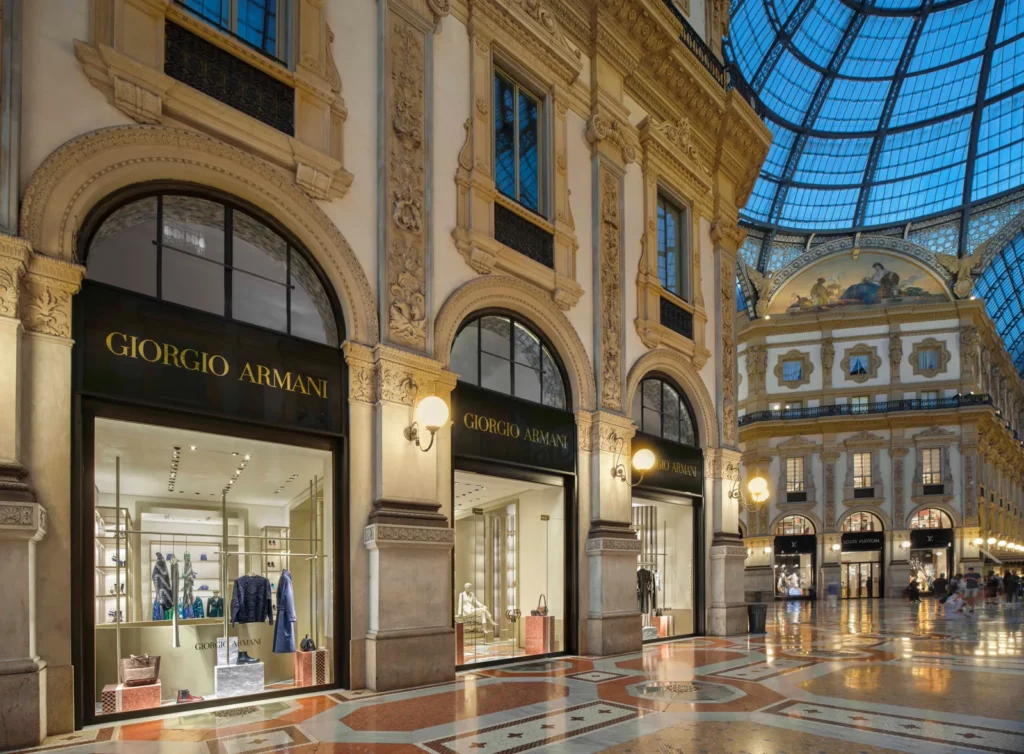
Via Montenapoleone is the loudest, the longest and the most photographed — the flagships of Prada, Gucci, Dior, Louis Vuitton, Fendi, Versace, Hermès and Giorgio Armani line both sides. Via della Spiga, parallel to it, is narrower, pedestrian-only, and visibly calmer. Via Sant’Andrea runs perpendicular and carries Chloé, Moschino and one of the most discreet Bottega Veneta entrances in the city. Via Manzoni, finally, anchors the district at its Duomo end and threads it toward Armani Hotel Milano and the Poldi Pezzoli Museum.
The four streets are short — you can cover the perimeter in twenty minutes. Stepping inside is what takes the time.
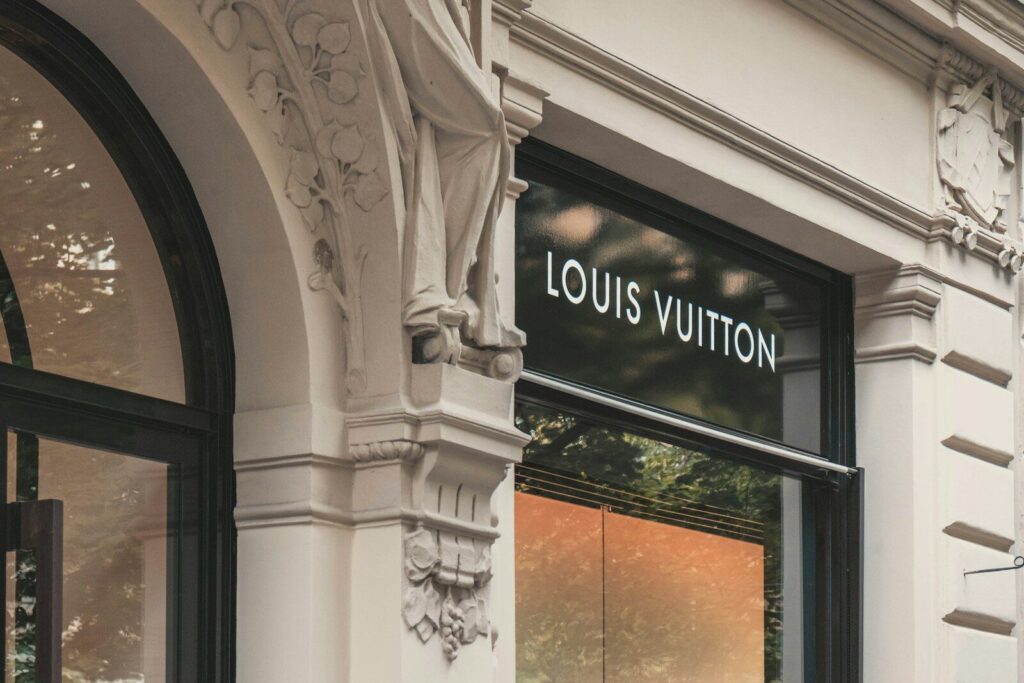
Via Montenapoleone has always been the postcard image of Milanese luxury, but the last three years have changed its position outright. The 2024 Cushman & Wakefield Main Streets Across the World ranking placed it first globally, ahead of Fifth Avenue and New Bond Street. The street responded the way only Milan responds — by spending more on the buildings themselves.
Valentino reopened in 2025 across more than 1,170 square metres on several floors, with the upper levels reserved for couture appointments. Chanel took a multi-floor townhouse on the same axis. Dolce & Gabbana uses the boutique at no. 4 as both retail floor and showroom for archival pieces. Bulgari, originally a Roman house, runs its largest international flagship here. The pattern is consistent: ground floor for walk-ins, first floor for clients, top floor for private appointments and made-to-measure.
A private fashion district guide who knows the houses can call ahead and request the first-floor experience for clients who are buying seriously — which is the difference between a thirty-minute browse and a two-hour appointment with espresso, archives and a tailor on standby.
Repeat visitors tend to prefer the side streets. Via della Spiga is pedestrian-only, narrow enough that the storefronts feel architectural rather than commercial. Prada’s flagship at Via della Spiga 5, renovated in 2018, runs across two floors and four hundred square metres — leather and accessories below, womenswear above, both arranged with the restraint Prada has always preferred. A few doors down, Tiffany & Co., Tod’s and Sergio Rossi share the same calm rhythm.
Via Sant’Andrea runs perpendicular and is where Milan’s residential luxury meets its fashion industry. Armani’s principal boutique sits at no. 9, in the same palazzo where the founder long kept his office. Around it: Saint Laurent, Chloé, Moschino, and the entrance to the Museo Bagatti Valsecchi, a Renaissance-style house-museum that is one of the most beautiful interiors in the city and a routine stop on a well-run private tour.
Via Manzoni anchors the southern edge of the district. It carries the entrance to the Armani Hotel Milano, the original 10 Corso Como (a short walk further north), and the doorway to the Poldi Pezzoli Museum — a private collection of arms, armour, jewellery and Renaissance painting that is, by some distance, the most informative stop on the entire walk for anyone interested in where Italian craftsmanship comes from.
The fashion district is also one of the densest concentrations of historic interiors in Milan. The Museo Poldi Pezzoli on Via Manzoni and the Museo Bagatti Valsecchi on Via Gesù are both private nineteenth-century houses turned into public museums; the Palazzo Morando on Via Sant’Andrea runs the city’s permanent fashion-history collection. A good private guide will route a half-day shopping morning through one of them, partly because the contrast is more interesting than three hours of consecutive boutiques and partly because the museums make sense of what you have just been looking at.
The most significant recent addition is the Portrait Milano, the Lungarno Collection hotel that opened in 2022 inside the former Archbishop’s Seminary on Corso Venezia. Its central courtyard, after five centuries of private use, is now the so-called Piazza del Quadrilatero — a stone arcade with boutiques and a high-end restaurant, and the most pleasant place in the district to sit after a morning of fittings. Tours often end here for lunch.
A booked private experience in the Quadrilatero is not, strictly speaking, a shopping trip. It is a half-day or full-day appointment built around three pieces:
The fee for a properly run private tour will sit between €350 and €800 for a small group, depending on length, the access required, and whether a personal shopper is layered on top of the guide. Personal shopping is the variant most clients eventually book on the second visit — a specialist who has worked the floor at one of the major houses and who can interpret a wardrobe brief inside the boutiques themselves.
The Quadrilatero rewards a certain rhythm. A few practical notes that experienced visitors and their guides have settled on:
Book the morning. Boutiques are calmest between 10am and 12.30pm, especially Tuesday through Thursday. Saturday afternoon is the worst slot in the week — the volumes are high and the experience inside the flagships is correspondingly faster.
Use the sales seasons carefully. Italian retail sales begin the first Saturday after the Epiphany (early January) and the first Saturday of July. Discounts in the Quadrilatero run between 30% and 50% and apply to a meaningful share of stock. A private guide will know which houses release inventory generously and which barely move at all.
Take the Iva-rebate seriously. Non-EU residents are entitled to a VAT refund on purchases above €70 per receipt; on a serious shopping day this is not a small number. The boutique will issue a tax-free form on request, and the refund is processed at the airport. A guide will quietly file the paperwork for you.
Stay in walking distance. The fastest way to ruin a Quadrilatero day is to commute in. The district sits within ten minutes’ walk of the Four Seasons, the Bulgari Hotel Milano, the Mandarin Oriental, and the Armani Hotel — each of which will hold your purchases until the afternoon. (For more on where to stay, see our guide to the best luxury hotels in Milan.)
For visitors with longer Italy itineraries, a fashion-district day pairs naturally with an evening at a Milan Michelin-star restaurant and, the morning after, a wider private tour of Milan covering the Duomo and the Brera district.
What is the Quadrilatero della Moda?
The Quadrilatero della Moda — sometimes called the Quadrilatero d’Oro — is Milan’s principal luxury shopping district, made up of four pedestrian-friendly streets between the Duomo and the Giardini Pubblici: Via Montenapoleone, Via della Spiga, Via Sant’Andrea and Via Manzoni. Every major Italian and international luxury house holds its Milan flagship inside this small rectangle.
How long does a private fashion district tour last?
Most are scheduled as half-day appointments of three to four hours. Full-day tours that include lunch, a museum stop and a personal shopping segment run six to seven hours.
Do I need to book appointments at the boutiques?
For walk-in browsing, no. For meaningful access — archive pieces, made-to-measure, after-hours visits, the sales director rather than the floor — yes, and that is precisely what a private guide arranges before you arrive.
How much does a Milan fashion district private tour cost?
Between €350 and €800 for a small group, depending on length, the level of access requested, and whether a dedicated personal shopper is included alongside the guide. Personal shopping packages, booked separately or layered on, typically add €200 to €400.
When is the best time of year for the Quadrilatero?
The Italian sales seasons — early January and early July — give the deepest discounts. Spring (March–May) is the most pleasant for walking the streets and pairs well with Design Week. Fashion Week weeks (February and September) are exhilarating but the boutiques are at their busiest.
Can non-EU visitors claim VAT back on purchases?
Yes. Non-EU residents are entitled to a VAT refund on individual receipts above €70. The boutique issues a tax-free form on request and the refund is processed on departure from the EU.
Where should I stay to be close to the fashion district?
The Four Seasons Hotel Milano on Via Gesù sits inside the district itself; the Bulgari Hotel Milano, the Mandarin Oriental, the Armani Hotel and Portrait Milano are all within a five-to-ten-minute walk.
Tour a piedi di Milano adatto alle famiglie, dal Teatro alla Scala al Castello Sforzesco.…
Scopri di Più →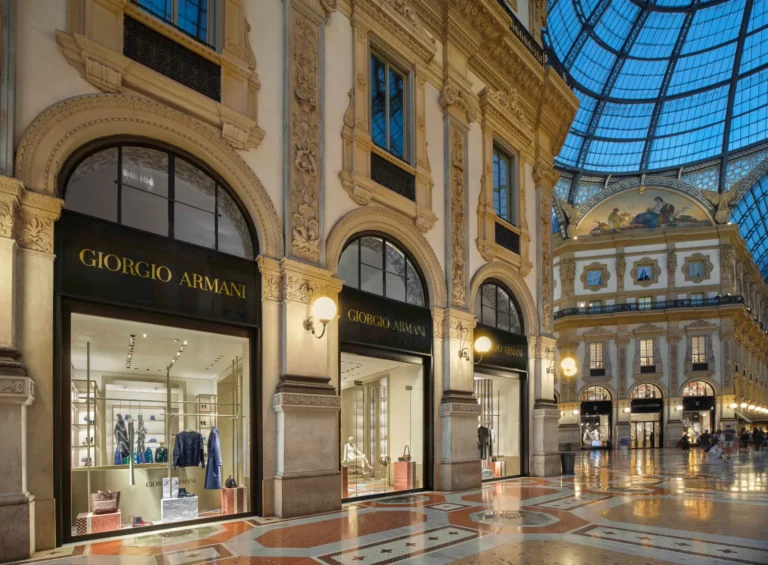
Esperienza di shopping VIP a Milano con personal stylist. Esplorate le boutique di lusso, gli…
Scopri di Più →
Tour del mercato alimentare di Milano con colazione italiana, degustazione di espresso e aperitivo tradizionale.…
Scopri di Più →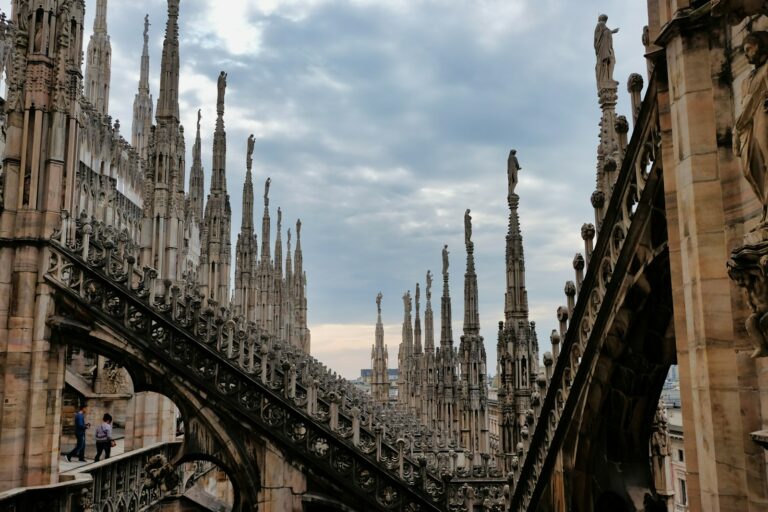
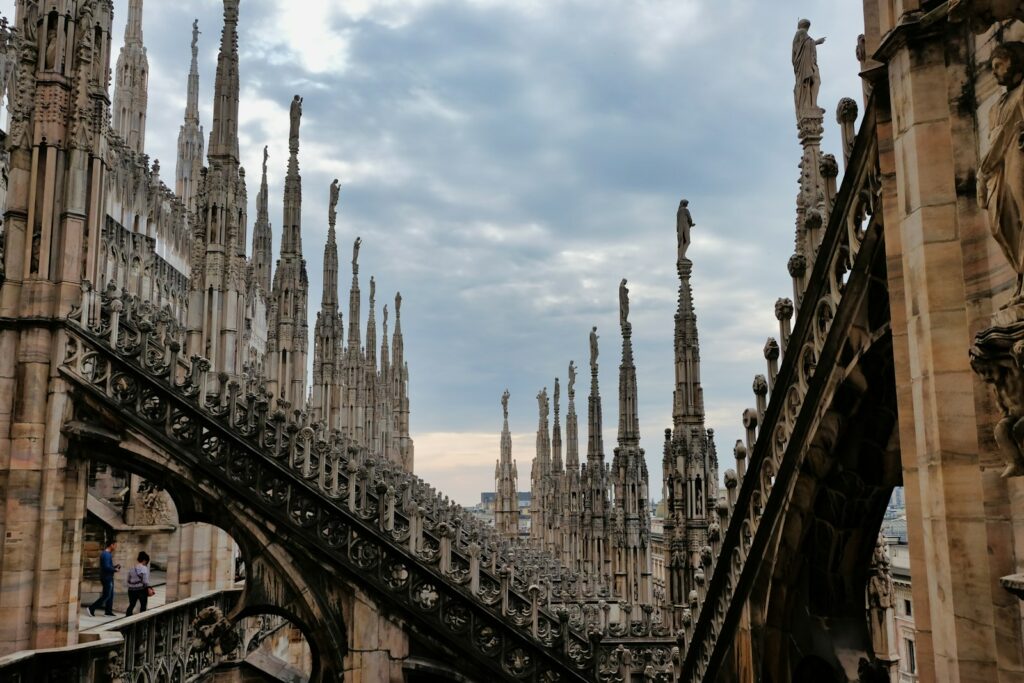
Tour del Duomo di Milano con accesso alla terrazza panoramica. Esplorate l'architettura gotica e godetevi…
Scopri di Più →Viaggia per l'Italia in Gold Black Style
28/02/2024
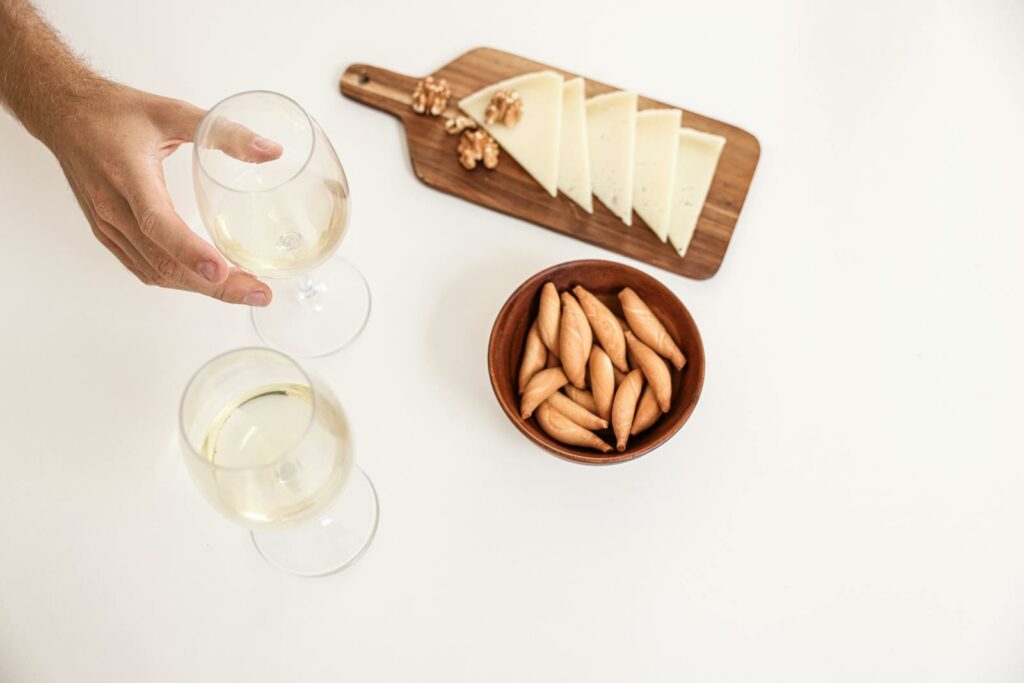
Tour del mercato alimentare di Milano con colazione italiana, degustazione di espresso e aperitivo tradizionale. Sperimentate…
28/02/2024
Esperienza di shopping VIP a Milano con personal stylist. Esplorate le boutique di lusso, gli atelier…
28/02/2024
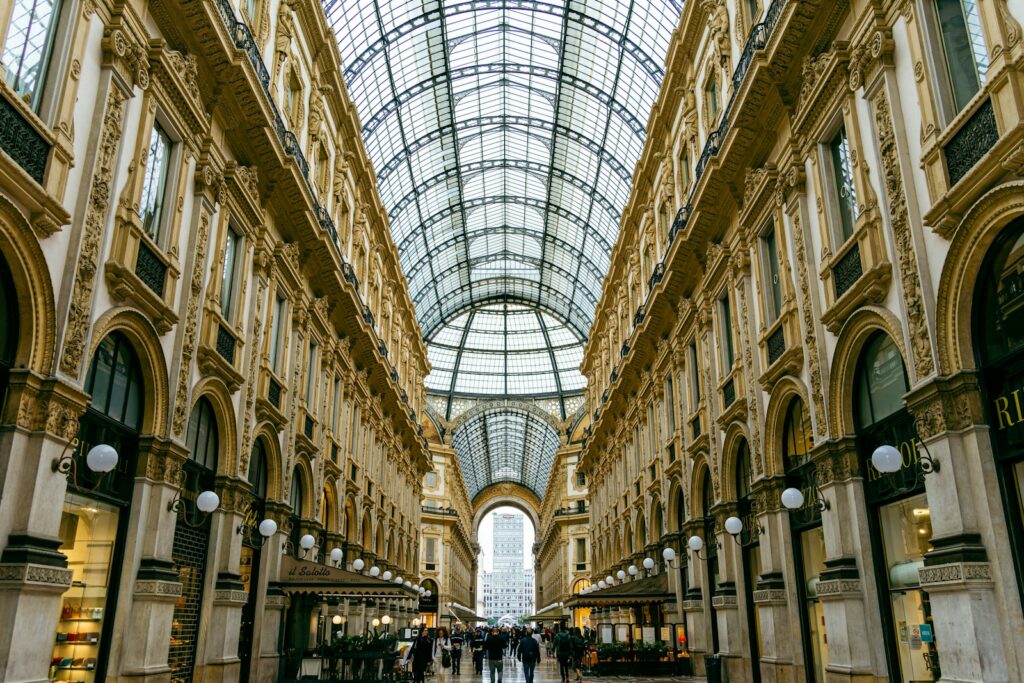
Tour a piedi di Milano adatto alle famiglie, dal Teatro alla Scala al Castello Sforzesco. Scoprite…
28/02/2024
Tour del Duomo di Milano con accesso alla terrazza panoramica. Esplorate l’architettura gotica e godetevi la…